blog
Hanging Leg Raises: What They Train and What They Cost
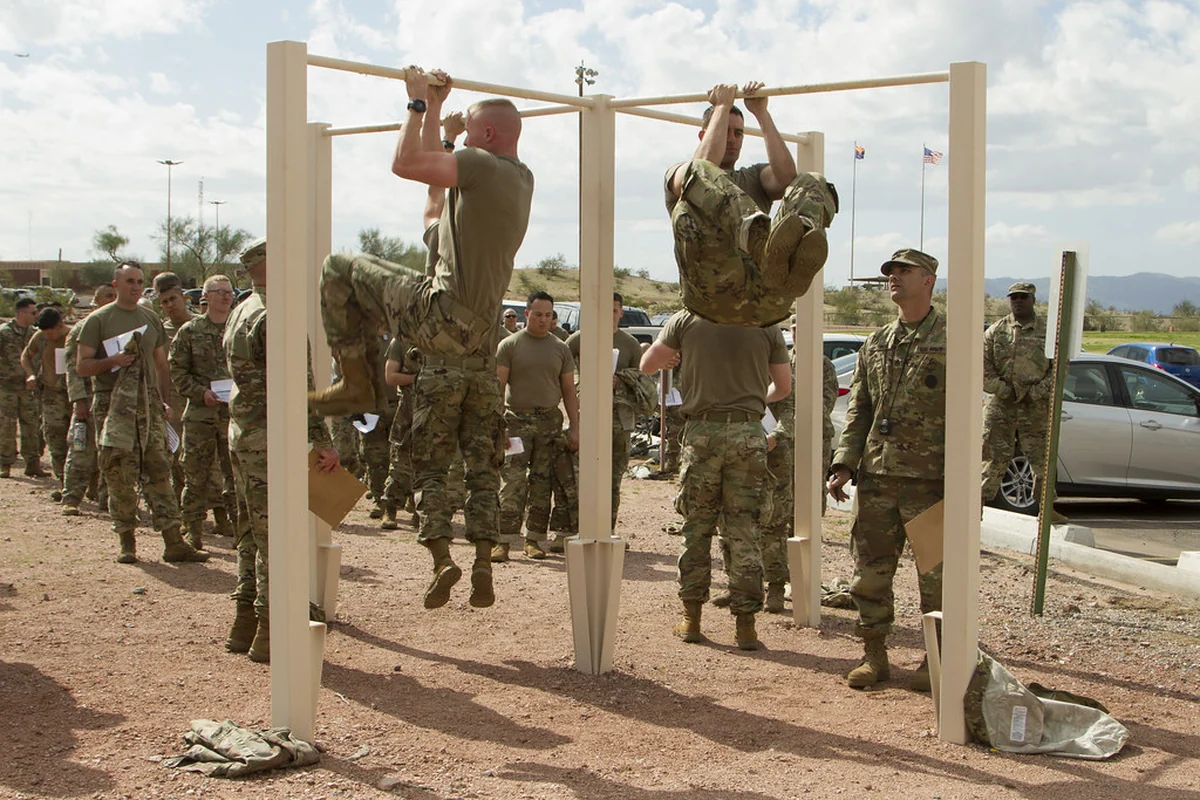
Photo: 123rd MPAD, U.S. Army, public domain, via Flickr
A hanging leg raise is a bar exercise where you hang at full stretch and lift your legs in front of you. The straight leg version puts the hardest measured demand on the abdominal wall of any exercise in its study, and it also compresses the spine the most, which is why beginners start with bent knees.
 Say where you stand. RepMaxing sets the target. coming soon
 What is a hanging leg raise?
A hanging leg raise is an exercise performed hanging at full stretch from a bar, lifting the legs in front of the body and lowering them under control. The hands stay on the bar throughout, the shoulders stay active rather than shrugged up around the ears, and the body does not swing between repetitions.
There are 2 versions, and the difference between them is the whole article. With the knees bent, the legs are a short lever and the exercise is manageable. With the legs straight, the lever is long, the abdominal demand rises sharply and so does the load on the spine.
What do hanging leg raises actually work?
They work the abdominal wall and the hip flexors at the same time, and they quietly work the grip and the lats because you have to stay on the bar.
The measurement that matters comes from McGill et al. (2015), who had 14 men perform anterior chain exercises while recording muscle activity, external force and 3D motion. The hanging straight leg raise created the highest challenge to the abdominal wall of the exercises tested, at over 130 percent of a maximal contraction in the rectus abdominis and 88 percent in the external oblique.
The hip flexors are the part people leave out. Kim and Lee (2016) compared the sit-up and the leg raise with electrodes on the upper and lower rectus abdominis, the external oblique, the rectus femoris and the iliopsoas, and reported that the leg raise produced a significant rise in hip flexor activation. Their conclusion actually favoured the eccentric sit-up for the abdominals specifically, which is a useful corrective to the idea that leg raises are a pure stomach exercise.
| Version | Lever | What it asks for | Where to start |
|---|---|---|---|
| Bent knee raise | Short | Control, and a hang you can hold | Everyone, first |
| Knees to chest with a tuck | Short | The pelvic tuck that does the work | Second |
| Straight leg raise | Long | The 130 percent figure above, and the spine load with it | Once the tuck is honest |
| Toes to bar | Long, plus range | Shoulder mobility on top | Last, and optional |
What do they cost?
They cost spine compression, and the same study that produced the impressive number produced this one too. McGill et al. (2015) estimated roughly 3000 newtons of compression during the hanging straight leg raise, against less than 2500 for the body saw, and noted that the body saw delivered substantial abdominal challenge in the most spine conserving way of the exercises tested.
Their own reading was that exercise choice should be made alongside a person’s injury history, training goals and current fitness. That is the honest framing. A hanging leg raise is a strong tool with a real price, and a beginner with a cranky lower back has cheaper options.
This is the part most articles about this exercise leave out, and it is the reason the bent knee version is not simply an easier version for weaker people. A shorter lever lowers the demand and the compression together.
Why does your grip give out first?
Your grip gives out first because the exercise is gated by the hang rather than by the stomach, and most people have never trained the hang on its own.
That is fixable and quickly. Sepehri Rahnama et al. (2025) randomised 30 physically inactive men into 8 weeks of pull-up training with different additions and reported that the forearm group raised hang time by 55.3 percent and pull-up repetitions by 222.5 percent. The full method is in grip strength for pull-ups.
Hanging straps take the grip out of the equation, and for someone whose goal is the abdominals that is a reasonable trade. For anyone on this site it is the wrong trade, because the hang is the first rung of how to do your first pull-up and the grip is the thing you are trying to build.
How do you actually do one?
Work through 4 stages, moving on only when the current one is controlled rather than merely possible.
- Hang still. 30 seconds without swinging, as a rule of thumb. If you cannot hang, nothing below this line applies yet.
- Bent knee raises. Knees up to roughly hip height, lowered slowly. The slow lowering is what kills the swing.
- Knees to chest with a tuck. At the top, pull the pelvis under so the lower back rounds slightly. This is the range the abdominals are actually responsible for.
- Straight legs. Only once stages 2 and 3 happen without the body rocking.
The mistake that swallows the exercise is swinging. If the body moves back and forth between repetitions, momentum is doing the lifting, and a set of 12 swung repetitions trains less than a set of 5 still ones. Pause for a beat at the bottom of every repetition and the problem solves itself.
The shoulder position matters too. Let the shoulders ride up into a passive hang and you lose the lats, which are the thing keeping you stable. The active hang drilled in scapular pull-ups is the position to hold, and it is the same one that makes a pull-up start properly. Youdas et al. (2010) recorded the latissimus dorsi at 117 to 130 percent of a maximal contraction during a pull-up, so this is not a small muscle to leave switched off.
How should you fit them into a week?
Fit them in as accessory work at the end of a pull day, 3 sets of 8 to 12 controlled repetitions on 2 or 3 days a week.
The repetition range follows the American College of Sports Medicine’s recommendation for novices, and the frequency follows Grgic et al. (2018), whose meta-analysis reported strength gains rising from an effect size of 0.74 at 1 session a week to 0.93 at 3. The set count and the placement at the end of the session are rules of thumb.
Putting them at the end is deliberate. They use the same grip and the same bar as your pulling work, and doing them first means the hang is already gone when it matters. The week that holds all of this is in the beginner calisthenics workout plan, and the bar itself is covered in the pull-up bar guide, including why a doorway bar usually leaves your feet too close to the floor for this exercise.
My own first attempt was 9 repetitions that I counted and would not count now. Filmed from the side, every one of them started with a small backward swing and finished at about 80 degrees with a flat lower back, which means I was training my hip flexors and calling it abdominal work. Cutting to 5 with a pause at the bottom and a deliberate tuck at the top felt like starting over, and it was the first version that made me sore anywhere near the stomach.
Are they worth doing at all?
They are worth doing if you already own the hang and your back is happy, and they are skippable if either of those is missing. The abdominal demand measured by McGill et al. (2015) is real and hard to match with floor exercises. The 3000 newtons is also real.
For this site the exercise earns its place for a second reason. Every repetition is time spent hanging, which feeds the grip and the shoulder position that the pull-up depends on, and the rep targets for that are in how many pull-ups you should be able to do.
The hanging leg raise is not one of the movements I built RepMaxing around. The app takes the rep counts you enter for pull-up, push-up and dip, 0 included, and a goal workout is 6 sessions ending in 1 attempt at a target computed from those numbers and held fixed until you reach it. Leg raises are what you can add to the bar day once those 3 numbers are moving. The first goal workout, Foundation, is free.
Questions people actually ask
What muscles do hanging leg raises work?
The abdominal wall and the hip flexors together, plus the grip and the lats to stay hanging. McGill et al. (2015) measured the hanging straight leg raise at over 130 percent of a maximal contraction in the rectus abdominis and 88 percent in the external oblique.
Are hanging leg raises good for abs?
They are among the most demanding abdominal exercises that have been measured. The same study that recorded over 130 percent of a maximal contraction in the rectus abdominis also recorded roughly 3000 newtons of spine compression, so the demand and the cost arrive together.
Should I bend my knees or keep my legs straight?
Bend them until the movement is controlled. Bent knees shorten the lever, which lowers both the abdominal demand and the spine load, and it removes the swing that ruins most first attempts. Straighten the legs when you can raise and lower without the body rocking.
How high should I lift my legs?
High enough that the pelvis tucks under at the top, which is the part that actually works the abdominals. Stopping at 90 degrees with a flat lower back is mostly a hip flexor exercise, and going higher without the tuck just adds swing.
Why do my hands give out before my abs?
Because the exercise is gated by the hang, not by the stomach. Sepehri Rahnama et al. (2025) raised hang time by 55.3 percent in 8 weeks with forearm work, which is the direct fix. Straps hide the problem rather than solving it.
Are hanging leg raises bad for your back?
They load the spine heavily. McGill et al. (2015) put the straight leg version at about 3000 newtons of compression against under 2500 for the body saw, and concluded that exercise choice should account for injury history. If your back objects, the bent knee version or a different exercise is the sensible answer.
How many should I do?
3 sets of 8 to 12 controlled repetitions, 2 or 3 times a week, as a rule of thumb. Quality decides the number here more than anywhere else: 5 repetitions with a tucked pelvis and no swing beat 15 kicked up with momentum.
References
- Muscle activity and spine load during anterior chain whole body linkage exercises: the body saw, hanging leg raise and walkout from a push-up (McGill et al., J Sports Sci, 2015)
- Comparison of muscular activities in the abdomen and lower limbs while performing sit-up and leg-raise (Kim and Lee, J Phys Ther Sci, 2016)
- Comparative effects of core versus forearm training on pull-up repetition performance in physically inactive males (Sepehri Rahnama et al., Sports, 2025)
- Surface electromyographic activation patterns and elbow joint motion during a pull-up, chin-up, or Perfect-Pullup rotational exercise (Youdas et al., J Strength Cond Res, 2010)
- American College of Sports Medicine position stand: progression models in resistance training for healthy adults (Med Sci Sports Exerc, 2009)
- Effect of resistance training frequency on gains in muscular strength: a systematic review and meta-analysis (Grgic et al., Sports Med, 2018)