blog
Grip Strength for Pull-Ups: The Limiter Nobody Trains
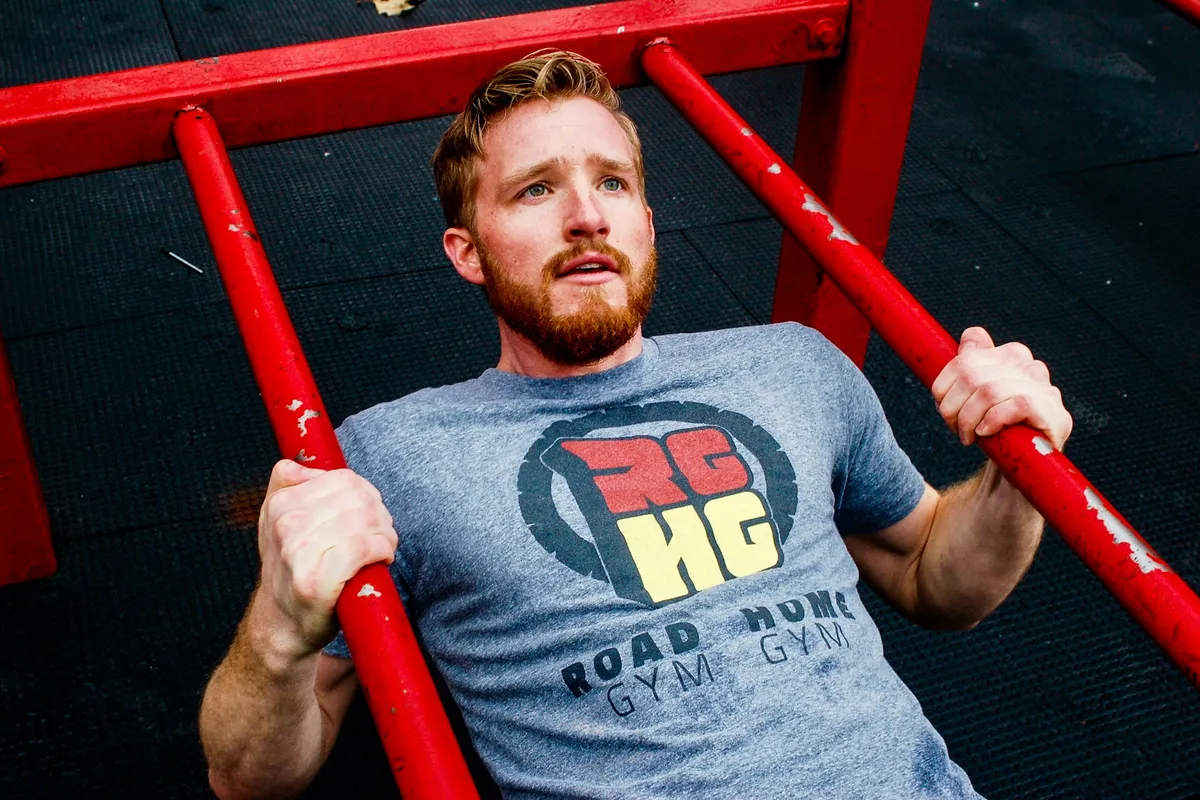
If your hands open before your back tires, grip is your limiter, and training it directly works better than training anything else. In an 8 week trial on untrained men, the group that added forearm work raised its pull-up reps by 222 percent, against far smaller gains from core work or intervals.
 Say where you stand. RepMaxing sets the target. coming soon
 Is grip really what stops your pull-up?
Grip stops the pull-up whenever your hands open before your back gets tired, and for a beginner that is common. The test takes a single set. Hang from the bar and pull until you cannot. If the last thing you feel is your fingers peeling off the bar while your back still has something left, grip is the limiter. If your back and arms stall while the hands are fine, it is not.
This matters because the fix is different. Training the back harder does nothing for a hand that lets go. And the forearms are the one muscle group in a pull-up that no study in our muscle breakdown even measured: Youdas et al. (2010) recorded 7 muscles during the pull-up and the forearm flexors were not among them, although they hold the whole body up for the entire set.
What does the evidence say about training grip?
The evidence says training the forearms directly is the most effective single addition to a pull-up programme, and the trial that shows it was run on exactly our readers. Sepehri Rahnama et al. (2025) took 30 physically inactive male students, average age 21, and randomised them into 3 groups for 8 weeks. Every group did the same pull-up programme. The only difference was what they added: intervals, core training, or forearm training.
| Group | Pull-up repetitions | Grip strength | Hang time |
|---|---|---|---|
| Pull-ups plus forearm training | up 222.5 percent | up 12 to 14 percent | up 55.3 percent |
| Pull-ups plus core training | moderate gain | smaller gain | moderate gain |
| Pull-ups plus intervals | smallest gain | smallest gain | smallest gain |
All 3 groups improved significantly, so the pull-up work itself did something in every case. What separated them was the supplement, and forearm training won on every measure the study took. The authors’ own conclusion is that forearm-specific training was the most effective strategy for pull-up performance, grip strength and endurance.
One caveat worth stating: 30 people in 3 groups is 10 per group, which is small. The direction is clear and the effect is large, but treat the 222 percent as this study’s result rather than a promise.
How strong is an average grip?
An average grip peaks at about 49.7 kilograms for men and 29.7 for women, between the ages of 30 and 39. Tomkinson et al. (2025) built those norms from 100 studies covering 2,405,863 adults across 69 countries, which makes it the largest reference set that exists.
Two things to take from it. Grip strength barely improves through early adulthood on its own, peaks in the thirties, and declines after, so whatever you have at 25 is roughly what you keep unless you train it. And a dynamometer reading is a single maximal squeeze, which is not the same task as holding your body weight for 30 seconds. A strong squeeze with no hanging endurance is a real and common combination.
How do you train grip for a pull-up?
You train grip for a pull-up by hanging from a bar, because that is the same hold under the same load. Everything else is a supplement.
- Dead hang. Straight arms, shoulders pulled down away from the ears, hold to just short of the point where the fingers start to slide. 3 holds, 2 or 3 times a week, as a rule of thumb. This is also the first rung in how to do your first pull-up, which is not a coincidence.
- Towel hang. Drape a towel over the bar and hold the ends. The thicker, softer grip loads the fingers harder and shortens the hold considerably.
- Farmer’s carry. Pick up something heavy in each hand and walk. This trains the crushing grip rather than the hanging grip, so treat it as variety, not as the main course.
- Just do more pull-up work. The rungs themselves train grip, since every one of them involves holding a bar.
The frequency comes from Grgic et al. (2018), who pooled 22 studies and found strength gains rising from an effect size of 0.74 at 1 session a week to 0.93 at 3. Forearms are not an exception to that.
Does the bar itself change things?
The bar changes things, and thicker or smaller holds make a pull-up measurably harder. Vigouroux et al. (2019) had sport climbers perform pull-ups on a gym bar, a large climbing hold and 4 small ones down to 10 millimetres, measuring force and forearm activity throughout. The number of reps, the maximal arm power and the total mechanical work all fell significantly as the hold got smaller, and the electromyography showed the finger flexors fatiguing.
There was no difference between a normal gym bar and a large climbing hold, which is the useful part for most people: a standard bar is already the easy end of the range. If you want to make grip the training target without changing anything else, a towel over the bar does what a small hold does.
When should you stop worrying about grip?
Stop worrying about grip once your hang time is no longer what ends the set. 20 to 30 seconds is enough to get through the early rungs, and 60 seconds is a solid milestone (both rules of thumb). Past that, the back and arms are the limit again, and the work moves to inverted rows and negative pull-ups.
Straps are worth a word. They belong on heavy sets where the hands would fail before the back, which is the situation described in weighted pull-ups. While grip is still the limiter, straps remove the exact stimulus you need.
When I built RepMaxing I left the hang out of the app on purpose: it takes rep counts for pull-up, push-up and dip, never a hang time, because a hang time cannot tell you whether you can pull. Grip work is what makes the rep count possible, and this article is where it lives instead. A goal workout is 6 sessions ending in 1 attempt at a target computed from the numbers you entered, held fixed until you reach it. The first goal workout, Foundation, is free.
Questions people actually ask
Does grip strength limit pull-ups?
For many beginners, yes. Sepehri Rahnama et al. (2025) randomised 30 untrained men into pull-up training plus forearm work, plus core work, or plus intervals. The forearm group gained the most in every measure, including a 222.5 percent rise in pull-up repetitions and 55.3 percent in hanging time.
What is an average grip strength?
Tomkinson et al. (2025) pooled handgrip data on 2.4 million adults from 69 countries and found strength peaks between ages 30 and 39, at about 49.7 kilograms for men and 29.7 for women. Those are single-hand dynamometer readings, and they say nothing about how long you can hang.
How do I train grip for pull-ups?
Hang from the bar. The dead hang is the most specific grip exercise for a pull-up because it trains the same hold under the same load. Add farmer's carries and towel hangs if you want variety. 3 holds to just short of failure, 2 or 3 times a week, is the rule of thumb.
Should I use straps for pull-ups?
Not while grip is your limiter, because straps remove the exact thing you need to build. They make sense later, on weighted sets where the hands would fail before the back. Until then the failing grip is the training stimulus, not an obstacle.
Why do thicker bars make pull-ups harder?
Because a wider hold gives the fingers less mechanical advantage. Vigouroux et al. (2019) had climbers do pull-ups on holds from 22 down to 10 millimetres and found the number of reps, the peak power and the total work all fell as the hold got smaller, with measurable finger flexor fatigue.
How long should I be able to hang from a bar?
20 to 30 seconds is the working target before moving past the first rung, and 60 seconds is a solid milestone. Both are rules of thumb. What matters more is the direction: if your hang time is rising, your grip is no longer the thing holding the pull-up back.
References
- Comparative effects of core versus forearm training on pull-up repetition performance in physically inactive males (Sepehri Rahnama et al., Sports, 2025)
- International norms for adult handgrip strength: a systematic review of data on 2.4 million adults (Tomkinson et al., J Sport Health Sci, 2025)
- Performing pull-ups with small climbing holds influences grip and biomechanical arm action (Vigouroux et al., J Sports Sci, 2019)
- Surface electromyographic activation patterns and elbow joint motion during a pull-up, chin-up, or Perfect-Pullup rotational exercise (Youdas et al., J Strength Cond Res, 2010)
- Effect of resistance training frequency on gains in muscular strength: a systematic review and meta-analysis (Grgic et al., Sports Med, 2018)